Our Process
How it’s raised. How it’s processed.
Both matter. Most brands only talk about the first one.
Part A
Raising: chick to market weight
- 1
Chicks arrive and brood
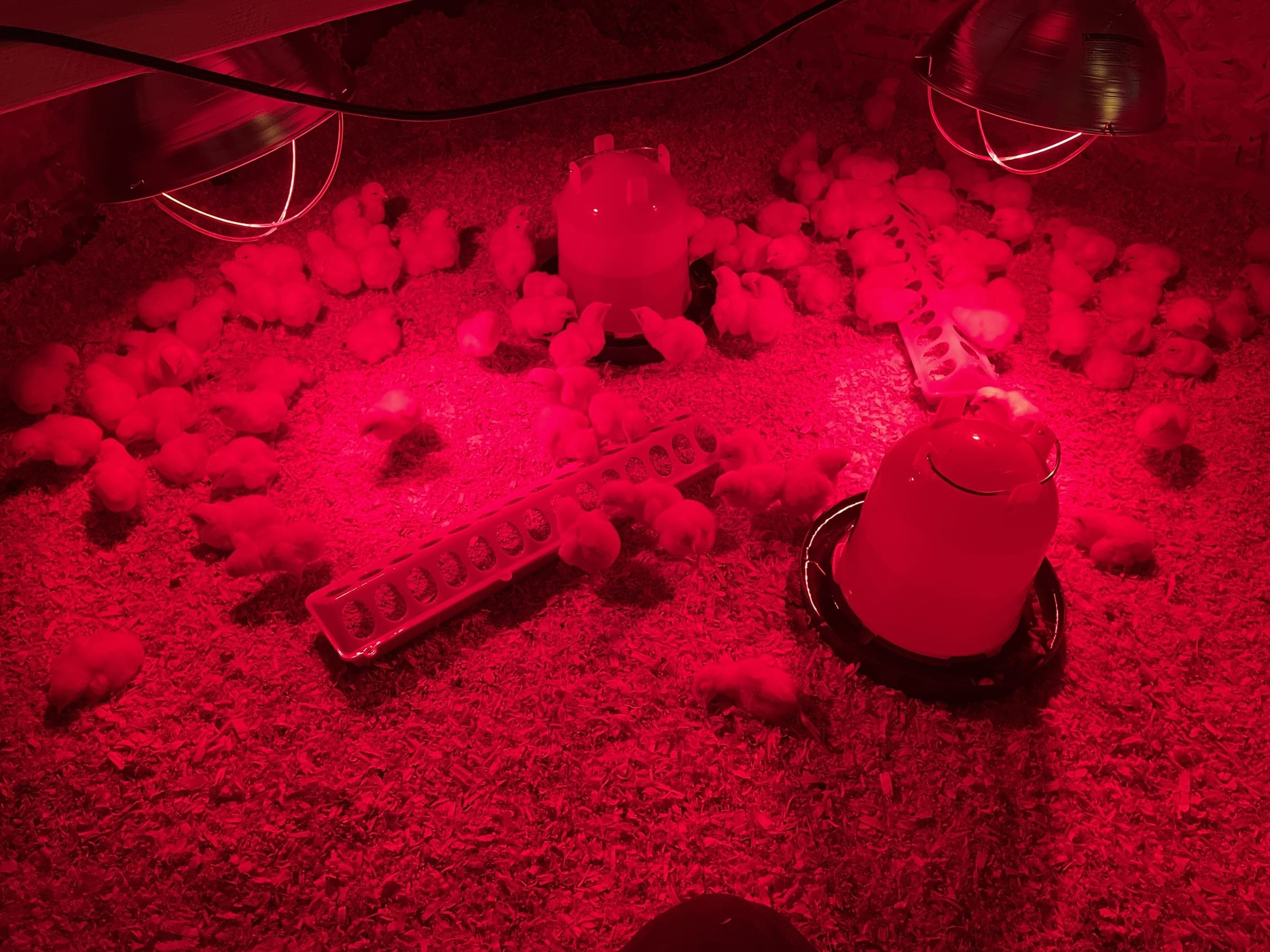
Day-old chicks come to the farm and start out in the brooder: warm, dry, protected, with feed and water right there. They stay until they're feathered out and ready for the outdoors.
- 2
Out to pasture in chicken tractors
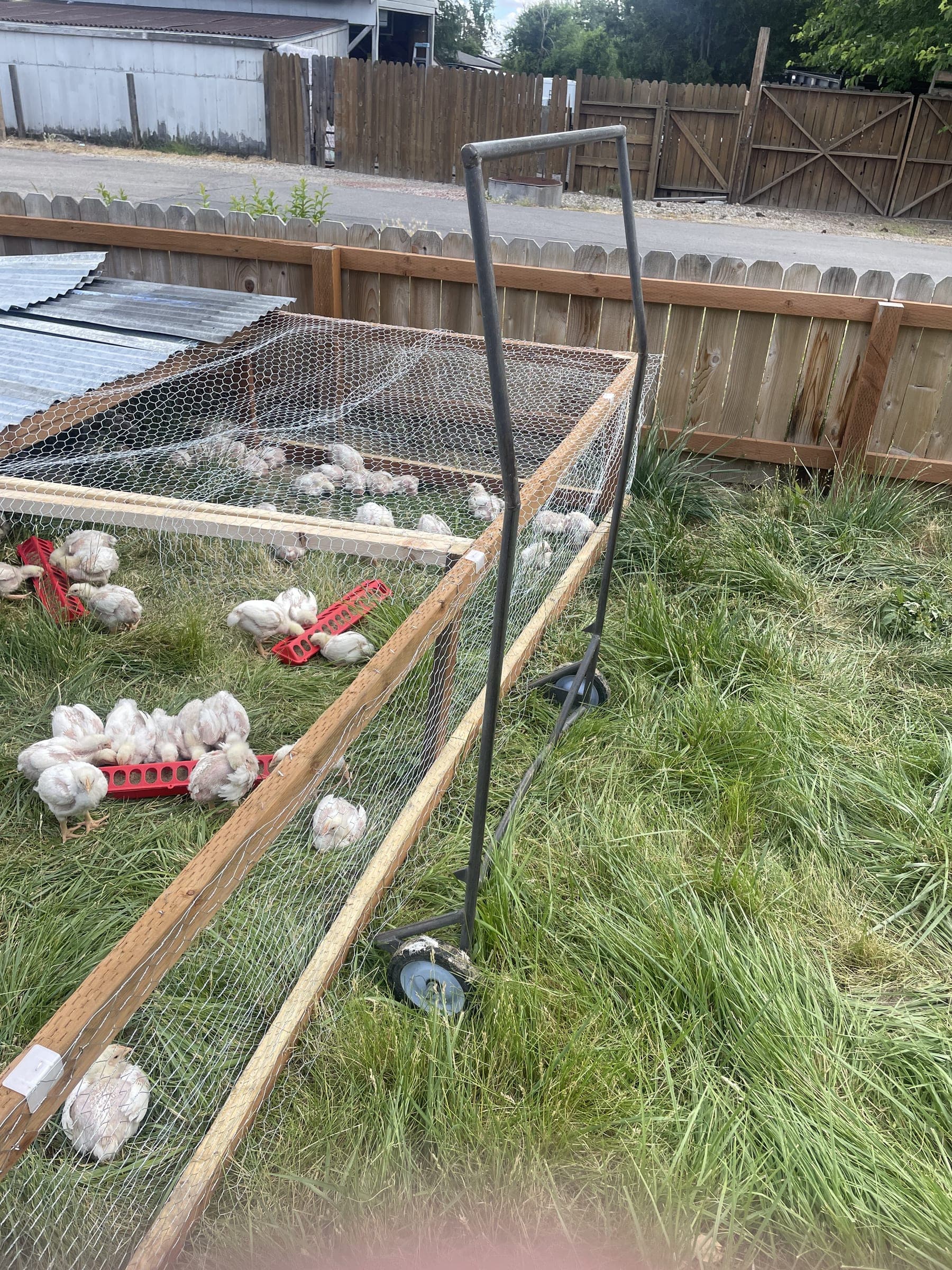
Once they're ready, they move into chicken tractors on the pasture. Open-bottom pens that keep them safe from predators while they live on the grass.
- 3
Tractors move every single day
Every day we pull each tractor forward onto fresh ground. Fresh forage, clean ground, sunshine, fresh air. Yesterday's spot gets left behind to rest.
- 4
Birds reach market weight
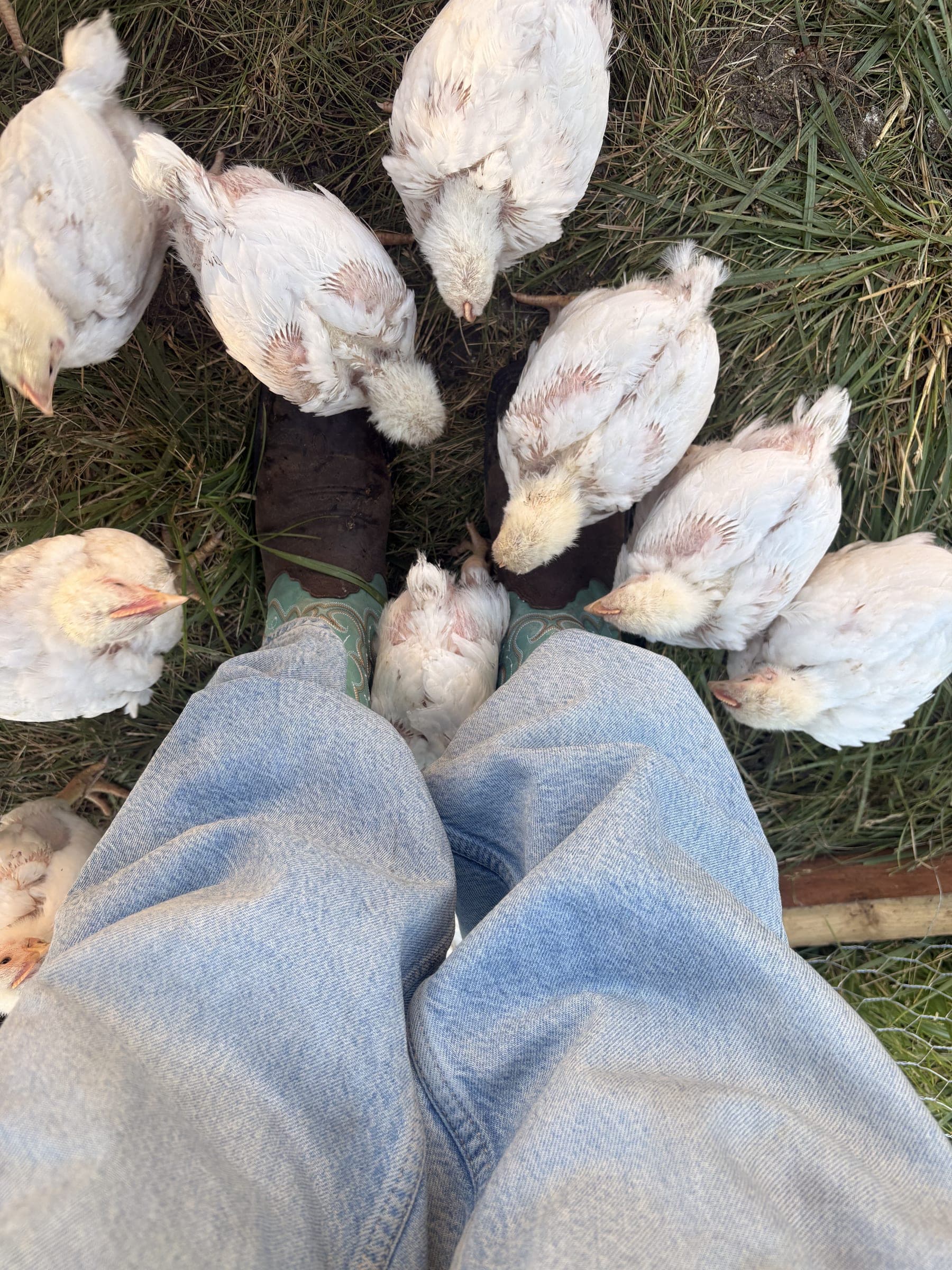
They grow on pasture and feed until they reach market weight. No shortcuts.
- 5
Processing
A short, calm trip, about 25 miles, to processing under USDA inspection. Then air-chilled.
PHOTO: processing facility exterior
Regenerative grazing
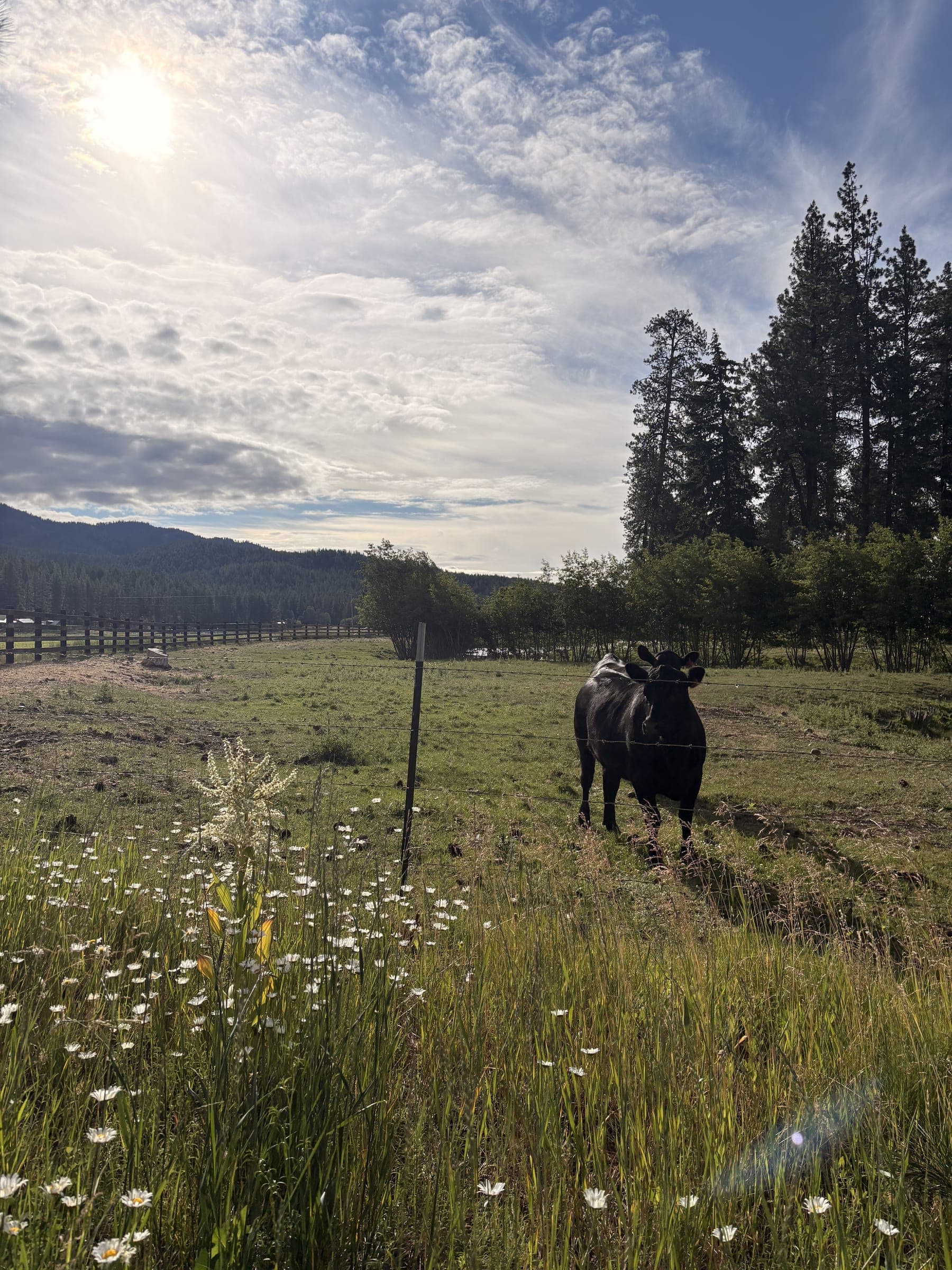
The birds work the land.
When a tractor sits on a strip of pasture for a day, the birds graze it and leave their manure behind. That’s fertilizer, spread exactly where it’s needed.
Then we move. The strip gets to rest and grow back. Fertilize, rest, regrow, over and over. That’s how you build healthier soil instead of wearing it out.
And the birds? They’re never sitting on yesterday’s mess. Fresh ground every day means cleaner, healthier lives.
“Most people never think about the last day of a chicken’s life. We think about it a lot.”
Part B
Processing matters as much as raising.
Our birds are processed under USDA inspection about 25 miles from our pasture. That short distance isn’t an accident. It’s one of the most important choices we make.
25
miles to processing
Big integrators often haul birds long distances to large regional plants. We keep the trip short and calm.
Why distance matters
Long transport and stressful handling before processing are linked to:
- Stress hormones
- Long transport and rough handling are linked to elevated cortisol and corticosterone.
- Depleted muscle energy
- Stress burns through the energy stored in the muscle before processing. That changes the meat.
- PSE meat
- Pale, soft, exudative. Meat that looks washed out, feels mushy, and leaks moisture.
- DFD meat
- Dark, firm, dry. The other way stress shows up in the final product.
- Deaths in transit
- Long, stressful trips are linked to birds dying before they ever reach the plant.
A short, calm trip protects the bird and the quality of the meat.
After processing
Air-chilled. No chlorine bath.
We cool our birds with cold air, not a chlorinated water bath. Nothing soaks into the meat, so you’re paying for chicken, not chill water.
What you get: firmer texture, crisper skin, and a cleaner flavor.